half life formula for first order reaction
It is denoted by t12 For first-order reaction we know that k 1t. For a first order reaction t½ 0693 k and for a second order reaction t½ 1 k Ao.
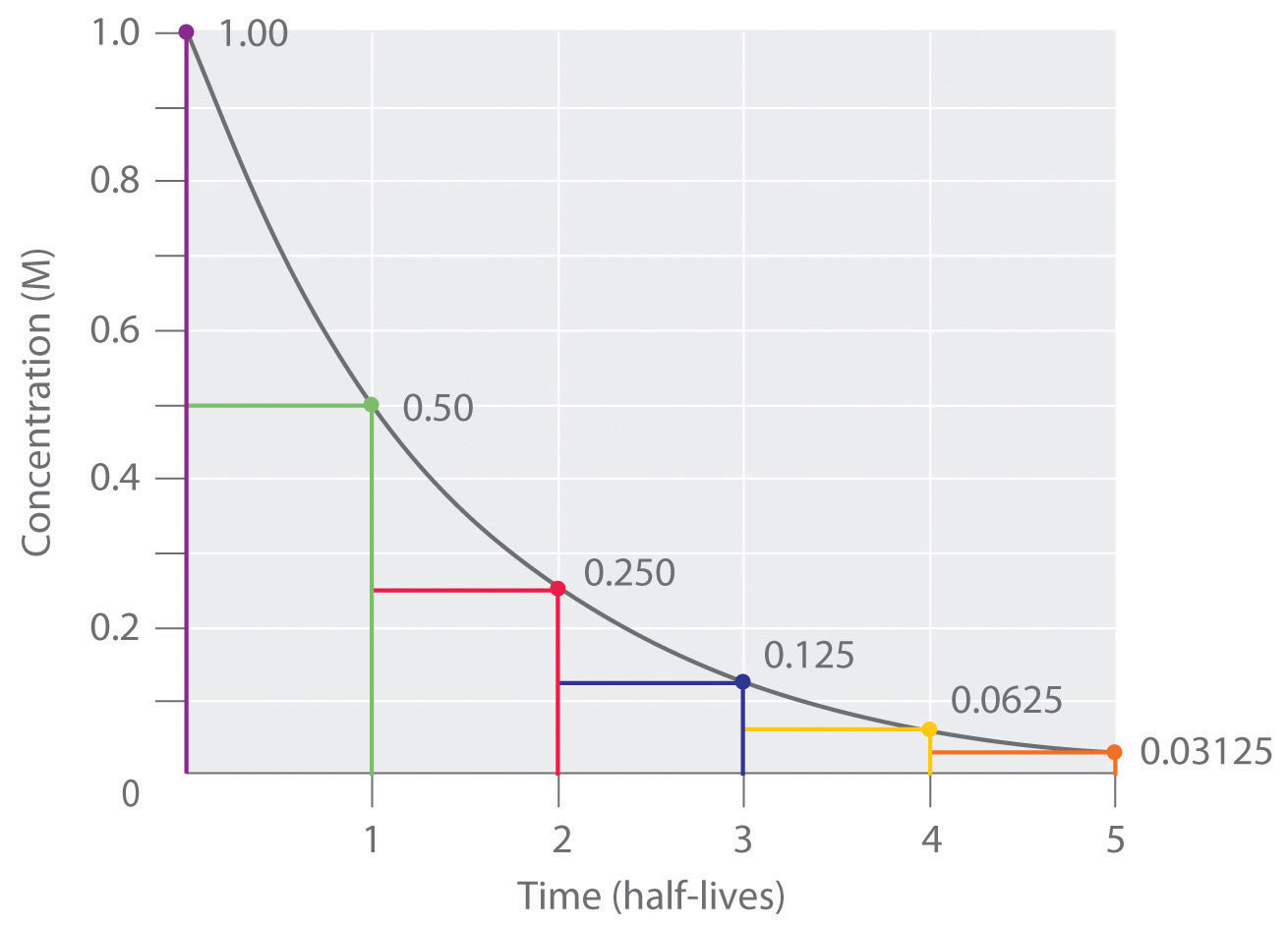
4 5 First Order Reaction Half Life Chemistry Libretexts
T_ 12 frac 1 A_0k.
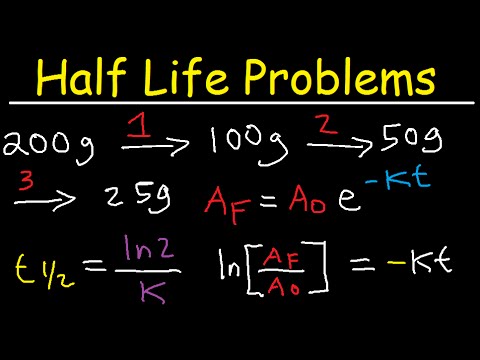
. Half life formula of nth order reaction is t 1 2 2 n 1 1 A 0 n 1 n 1 k Problem practice If the half life period for a first order reaction in A is 2 minutes How long will it take A to reach 25 of its initial concentration. In some cases we need to know the initial concentration A o Substitute this information into the equation for the half life of a reaction with this order and solve for t ½. Numericals on First Order Reactions.
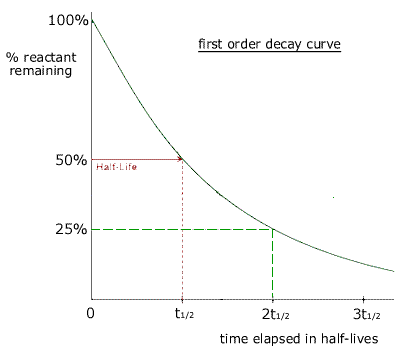
Half-Life of a First-Order Reaction The half-life of a chemical reaction denoted by t 12 is the time taken for the initial concentration of the reactant s to reach half of its original value. What is the formula for half-life of a drug. The half-life of a first-order reaction is given as t 12 0693k.
The order of the reaction or enough information to determine it. For the first order reaction you can plug the definition of the half life into the concentration-time reaction to obtain a neat relationship. Substituting these terms into the rearranged integrated rate law and simplifying yields the equation for half-life.
Chemical Reaction Half-Life The mathematical formula that can be used to calculate the half-life for a zero-order reaction is t12 R02k. Loge A0 A At half life period t t12 and A A02 On substituting k 1 t12. The formula for half-life in chemistry depends on the order of the reaction.
The half life of a first order reaction is 100 seconds at 280 K. Plot the graph between Concentration Rate and Time for First Order Reactions. For a zero order reaction the formula is t½ Ao 2k.
Hence the half-life period of a reaction of the first order is independent of the initial concentration of reactant but depends upon only the rate constant of the first order. A slow reaction longer half-life will have a smaller k. Using the half-life equation derived from the concentration-time equation as shown in example 1 we can solve for the initial concentration of reactant.
For the first-order reaction the half-life is defined as t12 0693k And for the second-order reaction the formula for the half-life of the reaction is given by 1k R 0 Where t12 is the half-life of a certain reaction unit - seconds R0 is the initial reactant concentration unit - molL-1. Integrated Rate Law Equation for First Order Reaction. One of the most important applications of half-life is carbon dating which determines the age of useful artifacts by studying their half-life period.
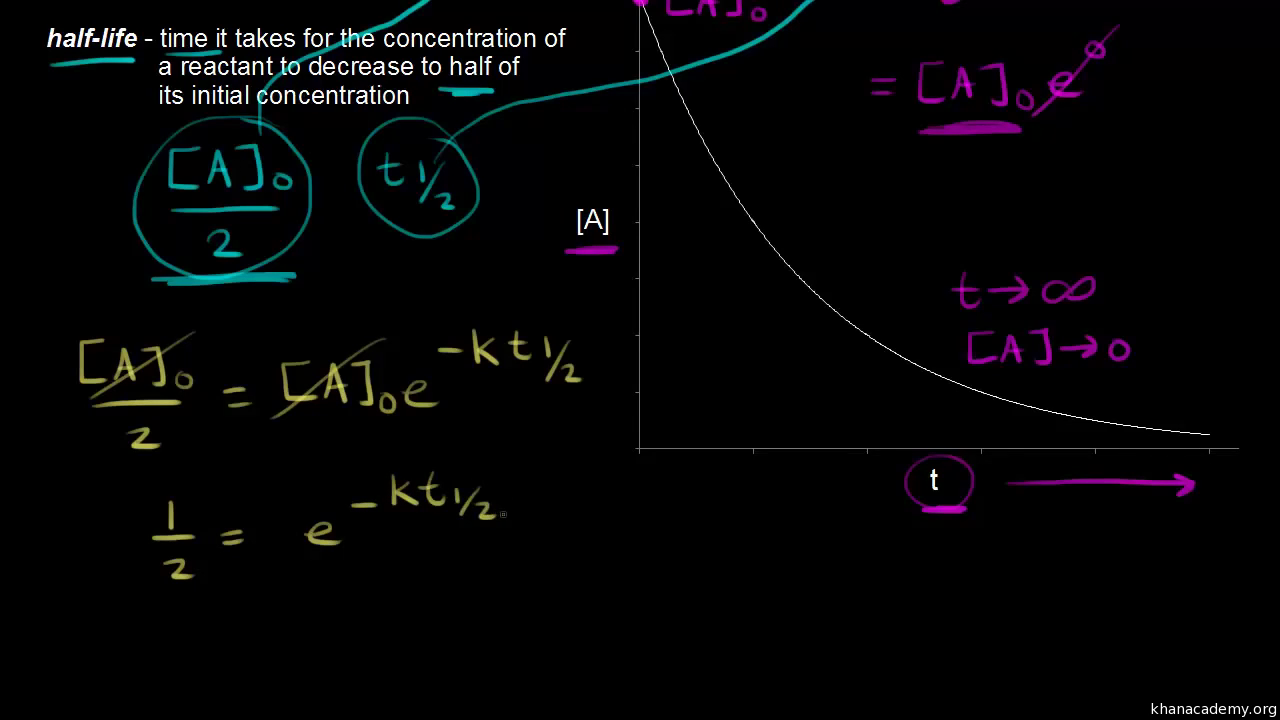
Half-life can be measured for first second and third-order reactions by substituting t t12 Half-life and R R 0 2 in the rate constant equation of respective reactions. Therefore At t t 12 A A 0 2. Half-life or t½ is the time that elapses before the concentration of a reactant is reduced to half its initial value.
What is the expression for Half-Life of a First Order ReactionHere I derive it from the integrated rate lawThe answer is t ln 2 kAsk me questions. We can see that the half-life of a first-order reaction is inversely proportional to the rate constant k. The half-life of a reaction is referred to as t 12 unit - seconds The initial reactant concentration is referred to as R.
Its unit is that of time ie. Where The half-life of a reaction is referred to as t 12 unit - seconds The initial reactant concentration is referred to as R 0 in molL. The half-life of a zero-order reaction the formula is given as t 12 R 0 2k.
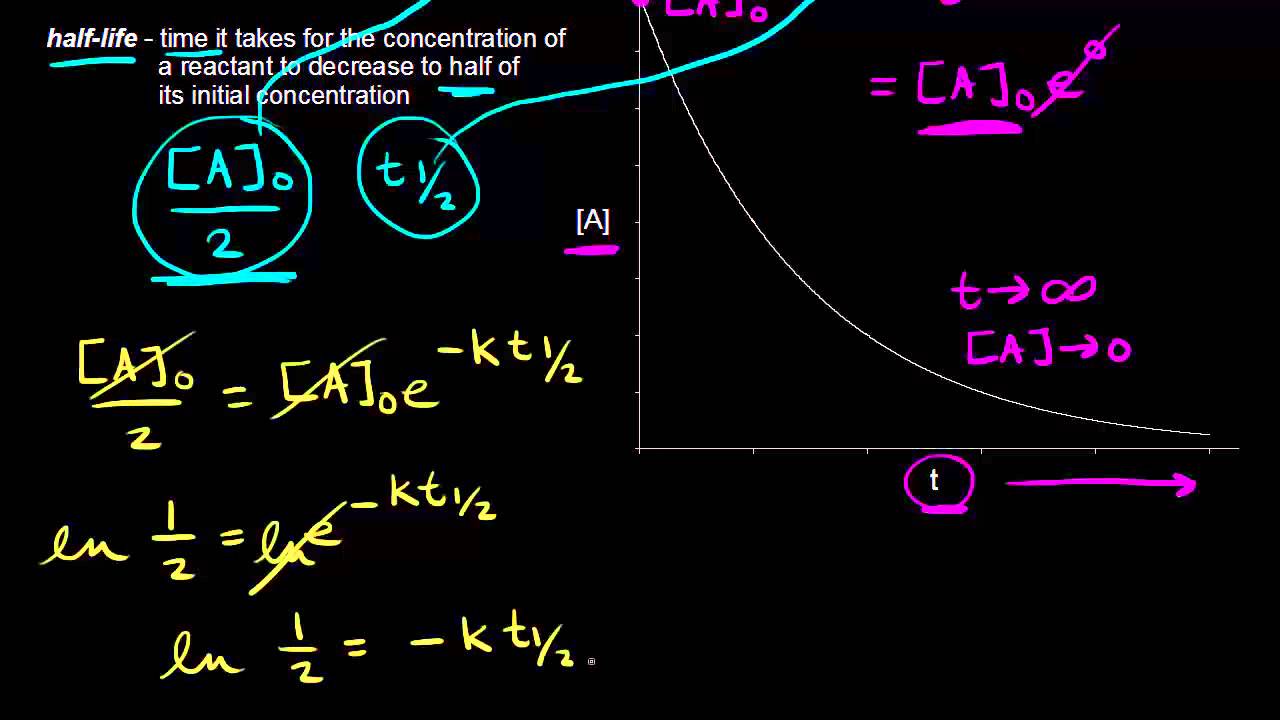
Loge A0 A02 t12 0693k. Ln AtA0 -kt At12 12A0 ln 12A0A0 -kt12 ln 2 0693 kt12 Notice that the half life does not depend on the reactant concentration. The half-life of a second-order reaction is given by the formula 1kR 0.
The half-life of a first-order reaction is a constant that is related to the rate constant for the reaction. The half-life t12 is the time it takes for the plasma concentration of a drug or the amount of drug in. The half-life of a second-order reaction is given by the formula 1kR 0.
The half-life of a first-order reaction is provided by the formula. The rate constant k for the reaction or enough information to determine it. Half-time or half-life of a first-order reaction is the time taken to reduce the concentration of the reactant to half of its initial value.
A fast reaction shorter half-life will have a larger k. The formula for a reactions half-life in a second-order reaction is 1k R0. The half-life of a first-order reaction is given as t 12 0693k.
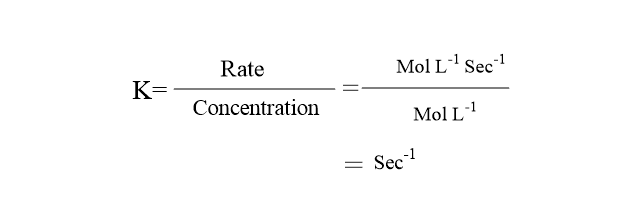
First Order Reaction Definition Example Half Life Period Chemist Notes
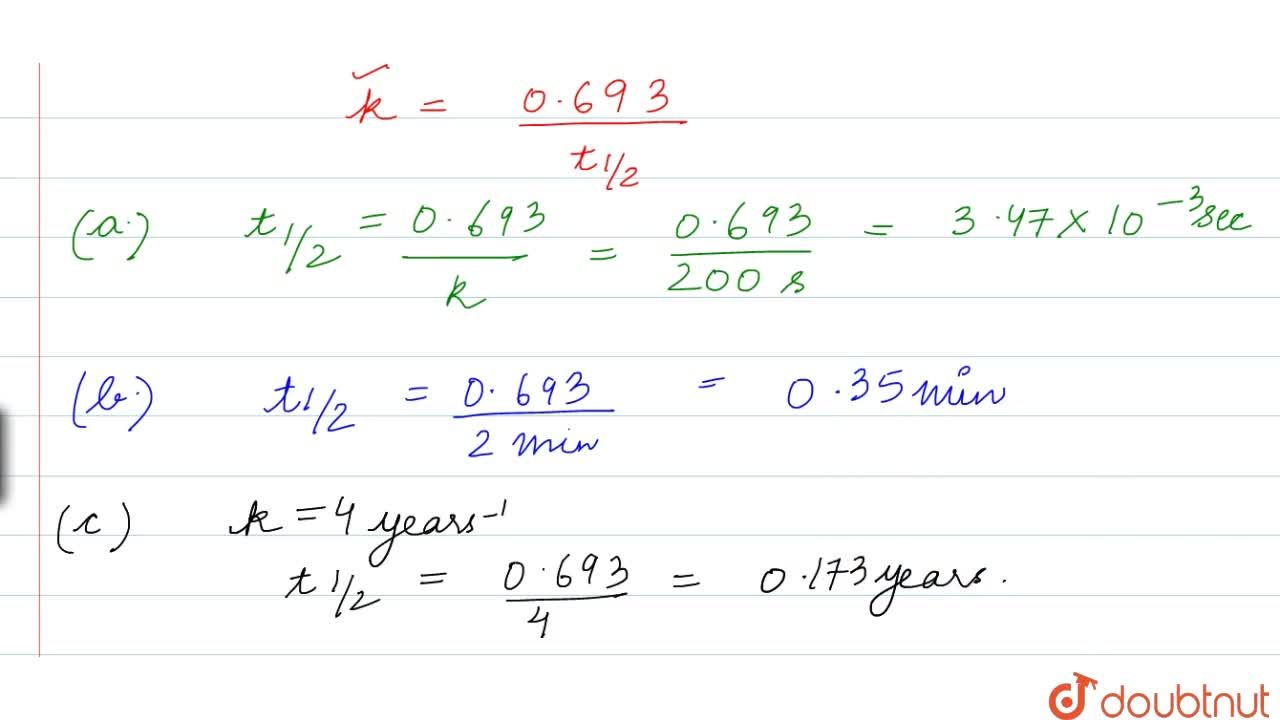
Calculate The Half Life Of A First Order Reaction From Their Rate Constants Given Below A 200s 1 B 2 Mi N 1 C 4years 1

Organic Chemistry Half Life And Shelf Life Of Second Order Reaction Chemistry Stack Exchange
Half Life Chemistry Problems Nuclear Radioactive Decay Calculations Practice Examples Youtube

Calculate The Half Life Of A First Order Reaction From Their Rate Constants Given Below A 200 S 1 B 2 Min 1 C 4 Year 1
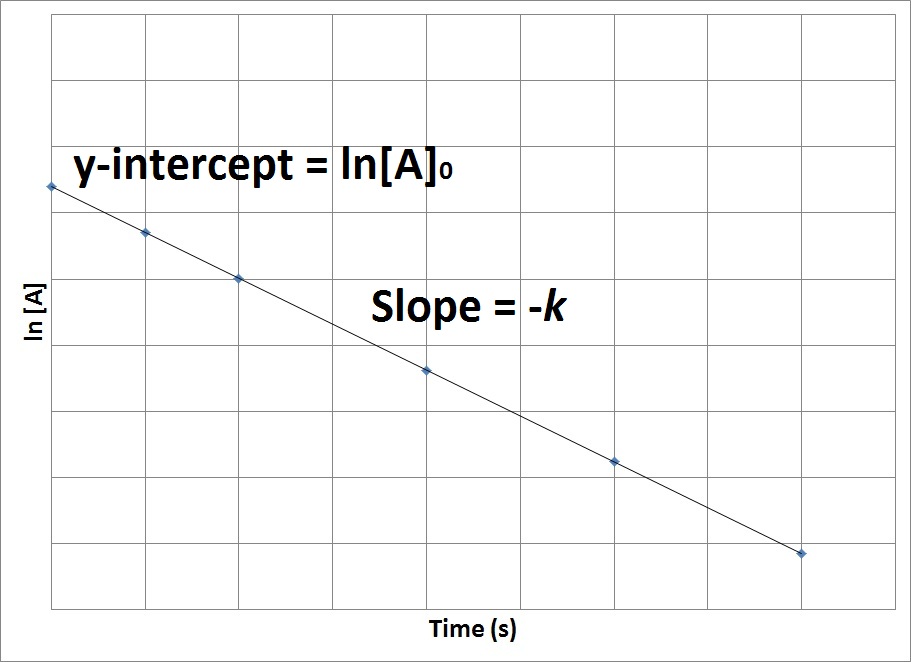
Concentration Time Relationships Integrated Rate Laws Introductory Chemistry 1st Canadian Edition
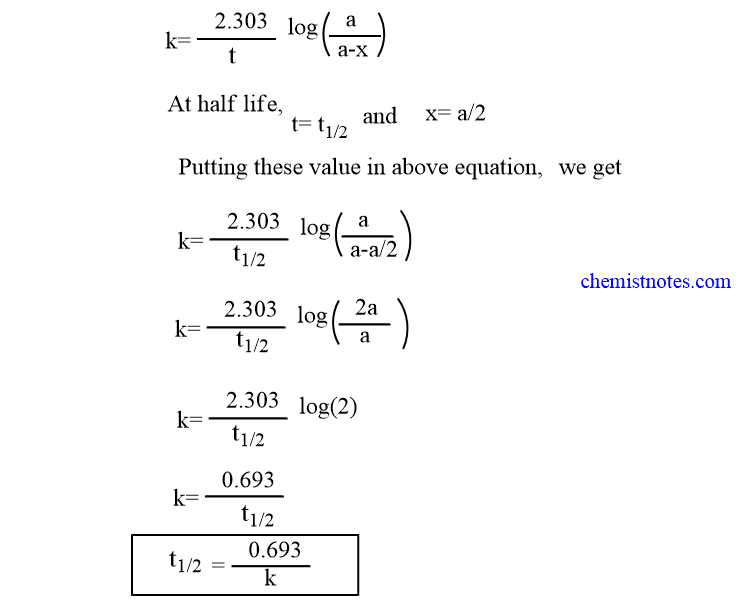
First Order Reaction Definition Example Half Life Period Chemist Notes
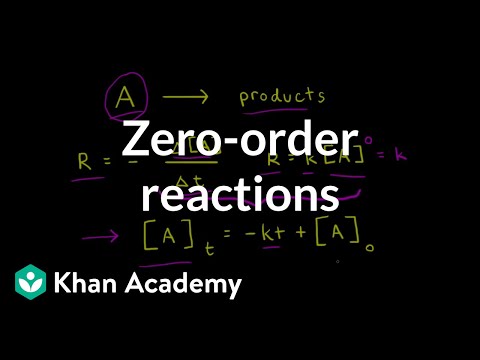
Zero Order Reactions Video Kinetics Khan Academy

13 4 The Integrated Rate Law The Dependence Of Concentration On
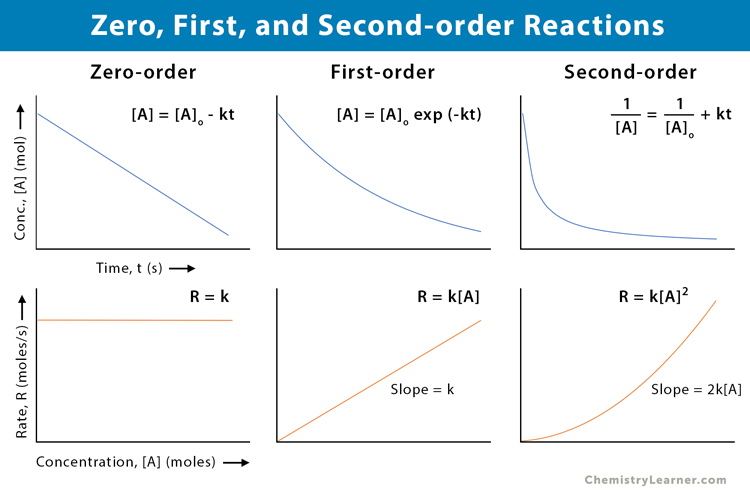
First Order Reaction Definition Examples And Equations
Kinetics 6 34 Half Life
Half Life Of A First Order Reaction Video Khan Academy

Calculate The Half Life Of A First Order Reaction From Their Rate Constants Given Below A 200 S 1 B 2 Min 1 C 4 Year 1
Half Life Of A First Order Reaction Video Khan Academy

First Order Reaction Chemical Kinetics First Order Reaction Youtube
First Order Reaction Definition Examples And Equations
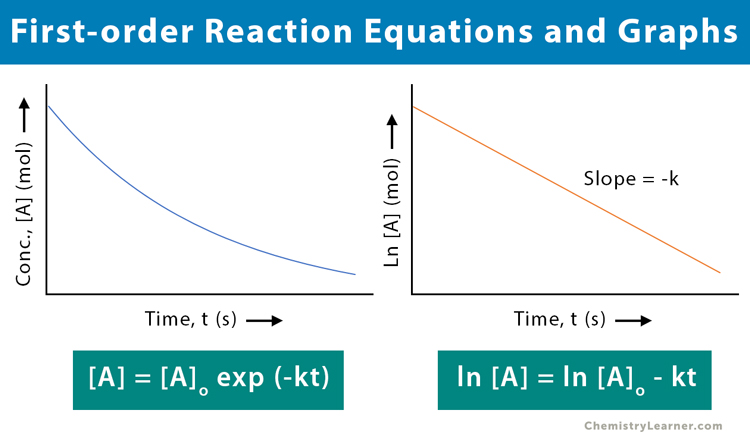
First Order Reaction Definition Examples And Equations

Integrated Rate Laws Zero First Second Order Reactions Chemical Kinetics Youtube
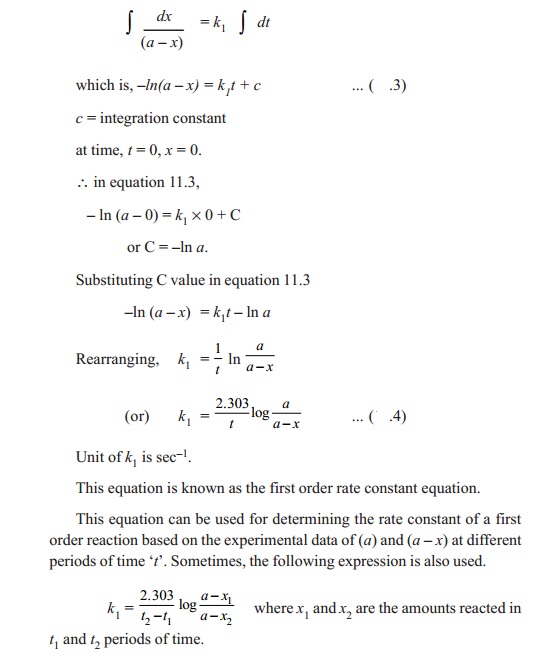
Rate Equation For First Order Reactions